GTL: VR Could Save The World, But There Are Hurdles To Cross First
By Jesse Collins ·
Companies like HTC and Walmart use Virtual Reality technologies to make a positive impact... But is VR already failing the gaming community?
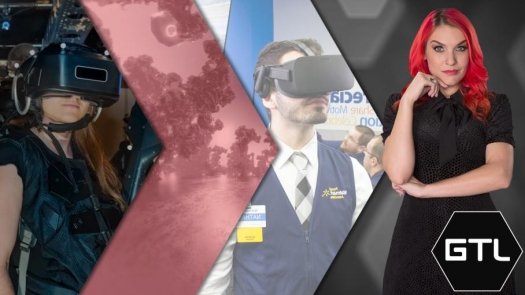
With the rise of virtual reality and mixed reality headsets, the question remains on how they can be used for more than just games. HTC is partnering up with the World Economic Forum (WEF) to utilize their Vive headsets as "VR/AR For Impact". Meanwhile, the practical impact and applications of VR is the constant strive. Finally, what is the future of VR in games, not necessarily what it is right now, but years from now?
Officially launching back in January 2017, HTC Vive and the World Economic Forum took the world by storm with their partnership. Recently, however, they showcased their latest content at the United Nation’s Sustainable Impact Hub in Davos, Switzerland. One piece of content they brought along as OrthoVR. OrthoVR claims, for instance, “aims to increase the availability of well-fitting prosthetics in low-income countries by using Virtual Reality and 3D rapid prototyping tools to increase the capacity of clinical staff without reducing quality.” The Extraordinary Honey Bee is another that focuses on learning about the life and struggle of a honey bee to inform the public on what is at stake for humanity due to the dying bee population. Additional collaborative pieces of content include programs like The Blank Canvas: Hacking nature, LIFE (Life-Saving Instructions For Emergencies), Tree, and Awavena.
Outside of the specific programs of HTC and WEF's partnership, much more of a broadstroke can be had on the practical applications that VR has. The VR Institute of Health and Exercise exists to help provide concrete, objective data for the discussion of video games as a source of healthy physical activity. The VR Health Institute also aims to be a hub for the VR community interested in the broader impact and the role of virtual and augmented reality in a healthy lifestyle.
"I started playing VR games in late 2016," panelist Job Satuffer of the VR Institute of Health and Exercise said, "punching and moving to the rhythm, I found that I was really doing Cardio. Exercise was addictive, fun and it wasn’t something that I was dreading... I’m down over 85 pounds now."
VR education, which media like Ready Player One has glorified, has the potential to become the way to go. Immersive VR Education was founded in October of 2014 and has since developed a range of educational experiences. The discussion covers motion sickness and the thoughts on overcoming these to make VR more readily available for the education purpose. Jessica Villarreal of Voyager VR spoke up on this. "I was scared that motion sickness was going to be a staple of VR," she started. "Once the next generation of hardware came out - just like any technology - it’s going to get better."
Finally, they cover gaming's future in VR, bringing up several key points at what would make the concept successful. The common belief is that the major hurdle is price, considering virtual reality a luxury. Discussion brings up the issue of space necessities for major VR like Vive, whereas Playstation VR only requires players to sit on their couch.
Conversation wrapped up by talking about if AAA developers have a real edge over the lesser known devs due to brand recognition going into VR. Villarreal believes that now is the time for indie developers to jump into VR because 5 or 10 years from now, getting a foothold will be an issue. They continued to discuss the difference between arena and lounge based VR, such as the recent The VOID Star Wars VR attraction, vs. consumer-level VR.
The show has wrapped for today, but you can see it in its entirety in the video embed above.