Can You Survive The Toughest Competitive Fighting Game Scenes?
By TJ Denzer ·
You've got to be good if you want to be competitive in the fighting game community, but these games take the hardcore grind to a whole new level.
Fighting games are an inherently aggressive competitive scene. Being the best of the best requires the patience to understand a game’s roster front to back, learn your favorite characters like the back of your hand, plus keep a few back-ups handy, and then weather the circuit and grow among the flooded field of passionate fighters that want the same thing as you do at the bottom line – to win. Over the course of the years, local, regional, national, and world championships have brought enthusiasts of the forward-down-diagonal together in one place to thin the cream from the crop, but some scenes are just a bit more technical or difficult than others. Being a notable player in any one of them means something special, but can you overcome the barrier of entry to be there when the final brackets are drawn? These are the Toughest Competitive Fighting Game Scenes.
Guilty Gear Xrd

The Guilty Gear series has come to be the sugar-high hyper, adrenaline pumped counterpart to more methodic 2D fighters like Street Fighter over the last decades, and Guilty Gear Xrd REV 2 continues that tradition. There are technically easier characters like Sol Badguy and Ky Kiske that act as your fireball throwers and rush-down characters, but the general mechanics are brimming with a ton of technical options between different styles of cancels, knock-back bursts, in-action finisher sequences, and more. Even with easy characters, you don’t just have to be quick – you also have to be fairly precise. Even at the highest level, it’s not out of the ordinary for a battle-hardened pro to lose a combo or throw out a stray burst that can cost them a match. Take an event like CEOtaku 2017 where even in the finals, every match between Eli “LostSoul” Rabadad and Tsutsui "Taka" Takaaki came to extremely close finishes almost entirely because of a missed burst or two, with Taka coming out just ahead of the curve. Guilty Gear Xrd is enormous fun and the thrill of rising through it is tremendous, but it’s also a fighter that demands extremely fast inputs and pinpoint accuracy out of anyone claiming to be the best.
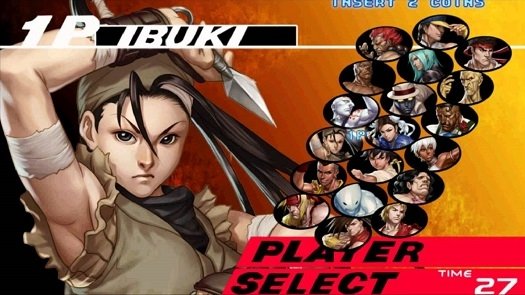
Street Fighter III: 3rd Strike

Ask any pro or casual Street Fighter fan where the height of style, visuals, and technicality lies in the series and there’s an extremely good chance they’ll bring up Street Fighter III: 3rd Strike. The third iteration of this white hot generation of the series brought about refinements that tweaked an already solid system to near perfection in terms of hand-drawn 2D fighters. Unfortunately, the technical prowess of 3rd Strike also makes it one of the toughest nuts to crack for any player with hopes of someday being in a prize pool. Understanding a character is just part of the equation. Getting down to the fine points and mastering the timing of regular parries and the 3rd Strike-exclusive guard parries are a big part of what separates the great from the good. The game has so many twists and turns that even in 2017 it still produces surprising pro-matches. In Japan’s 15th Cooperation Cup, an annual Street Fighter 3 competition, underdog Genki rose with his team to the finals and used Alex, a character almost universally considered lackluster among the roster. The run saw Genki break out some stellar tricks to overcome many of his opponents and help his team take the whole show in the Grand Finals. The fact that players honed in this game can unveil new ways to win over a decade later does well to show you just how deep this fighting game goes.
Tekken 7

The King of Iron Fists Tournament has been on every serious fighting game participant’s radar for decades now. Where series like Soulcalibur, Virtua Fighter, and Dead or Alive (the fighting games, not the beach fan-service games.) have sort of fallen by the wayside, Tekken has continued the tradition of granting players one of the most technically stellar 3D brawlers around. So what makes Tekken 7 a tough scene to get into? Combos for one. Tekken has always been notorious as a game with some of the most lengthy, yet easy to drop combos in the industry. The other difficult factor is the speed, freedom of movement, and fluidity of being in a cutting-edge 3D fighting arena. Even relatively general and staple series characters have severe openings that can be difficult to cover and easy to exploit at even the highest level of play. In an interview with InvenGlobal, EVO 2017 Tekken 7 champion Hyunjin “JCDR” Kim mentioned that though he mains Heihachi, a character that has been around since day one of the Tekken series, the character can be “difficult character to play with, and you’ll fall behind if you make even a small mistake.” If even the world champion can’t seal up all the cracks on the most common fighter in the series, you’d best be prepared to take some bumps on your path to the winner’s circle.
Super Smash Bros. Melee

Let’s clear the air right now by stating the obvious – no Smash Bros. game has ever been particularly difficult to play. They are Nintendo all-star fighters made for kids of all ages to enjoy. That said, it’s what players learn to do with the seemingly simple trappings of this children’s fight fest that make it a bit more of a rabid scrap. Melee has long been considered to be the competitive gem among the series, allowing more technical moves and advanced techniques like pivoting, wavedashing, directional influence and much more. While you could feasibly enter into any casual Melee fight and have a shot, you’re in trouble if you’re going against seasoned players that know their way around the moves. The biggest barrier to competitive play in Melee is that if you’re not already there or haven’t been since the beginning, than you’re severely behind everyone else that already knows the tricks and metas. Not to say it can’t be learned, but it’s a bumpy road to get on par with the folks that already know what they’re doing in the most technically tough Smash game out there, let alone get ahead of the curve with hopes of playing against passionate, longtime pros like Juan “Hungrybox” Debiedma and Kevin 'PPMD' Nanney.
Mortal Kombat X

Injustice 2 is most certainly holding the spotlight now that it has arrived and there’s a lot to love about it. That said, the immediate NetherRealm Studios predecessor, Mortal Kombat X, was not only one of the most brutal, but also one of the most technically demanding 2.5D fighters ever crafted. You thinking learning to play and/or counter 33 characters is tough? How about learning the three different variations attached to every one of those 33 characters? Some styles are lightly varied, some drastic, but all of them change the characters in ways that absolutely demand consideration when you’re readying your match-ups and strategy. With that in mind, it becomes that much more impressive when you consider that pro players like Carl "Perfect Legend" White and Dominique "SonicFox" Mclean figured out how to make livings off understanding the full complexity, strengths, and weaknesses of every aspect of the game. While everyone has their favorite character they want to see in a Mortal Kombat game, we might be better off with a select few to simplify matters when Mortal Kombat 11 eventually arrives, lest we force ourselves to learn nearly 100 more character patterns for our competitive aspirations.