The First Rule Of Fighting Club: Starting A Fighting Game Scene
By Jeff Kotuby ·
Looking to get better at fighting games but don't have any semblance of a scene nearby? Well, start your own! TG's got tips to help you start and maintain your own fighting game scene.
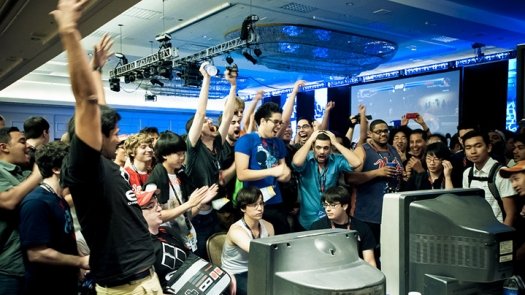
The Internet changed the way we play video games, and fighting games are no different. Rather than having to travel to arcades to get your matches in, you now had the ability to play against other players from all over the world. Rather quickly, it became obvious that players can only get so far playing fighting games online only. There’s something to be said for playing matches offline against a person sitting next to you, rather than sitting 500 miles away. If you’re unable to find a scene of your own, it might be a great time to start your own, depending on the game you enjoy playing.
I consulted with some members of the New Jersey fighting game community who have experience organizing their own fighting game events.

8 on the Break, located in Dunellen, New Jersey, is where many New Jersey-based fighting game players (including TG's Jeff Kotuby) call home base for training and playing games. (Credit: 8 on the Break)
→ Find a Place to Call Home
The first objective, according to most of the members, was to find a clean, open venue for attendees to visit. “That doesn't mean it has to be flashy,” said fighting game veteran Chris Buldo. “Just have a clean, publicly accessible spot that you're allowed to set up in, and that people will know where to find you (or your organization or whatever you end up marketing it as).” Then, it’s all a matter of being consistent - both with your events and with the games you play. Said John Cheatam, “If you want to run a weekly, make sure it starts at the same time on the same day every week unless you have a very good reason to cancel or postpone. Stick to your posted rules and don't make exceptions for people. If you're finding that a particular rule is causing problems, implement the rule change next session rather than mid-session.” According to Grim Patron, that also goes for your attendees, “Go out to events!” South Jersey is famous for people constantly saying "I don't have anywhere to play" and then not showing up when people host events. If you want tournament operators to bother hosting in your area you need to actually show up.”

Players do battle in Marvel vs. Capcom: Infinite at The Fall Classic 2018 (Credit: The Fall Classic)
→ Games, Games, Games
Once you’re consistently running events, it’s time to figure out what games you’ll play. Some have said to start with one game, but some have given different advice. “Instead of starting with one game,” Buldo said, “have a few of the recent titles a lot of people are playing on deck and ready to go. You can do the cute, niche stuff as time goes on, or even encourage people to bring setups if you can dedicate an area to that, venue allowing.” Longtime tournament operator Todd Dwyer said to also “let the game selection grow organically based on player feedback.”
→ The Power of Friendship.
Other than venue, the biggest piece of advice I received was how powerful a friendly, nurturing environment can be for players interested in attending tournaments. “It sounds cheesy but remember that friendship is the crutch of what keeps people in a community and regularly attending,” said Calvin Crawford. “Making sure people feel welcome AND engaged is better consistent numbers.” “You can't force people to like each other, but if everyone is being a jerk no one will want to show up and play,” Buldo said, “So at least encouraging people to be nice without explicitly policing them will create a more comfortable atmosphere for everyone.”
This is very much true in today’s world, but you may find old school fighting game players who don’t feel the same way. Growing up in the early-to-mid-2000s arcade scene, we very rarely had individuals who were “nice” and “welcoming” at events. People had their cliques, sure, but we were mostly looking out for ourselves. It could’ve been because every match was a money match (we couldn’t play the games without putting quarters in!) or because of the different era it all took place in, but nobody ever really seemed like they were happy to see competition show up for anything other than a chance at some cash. Luckily, as I attend weekly and monthly events, things seem to have changed for the better. Everyone is very kind and welcoming, and willing to sit down and work on matchup issues, new tech, and some casual matches. They’re also very much willing to turn the switch on and play seriously when it’s time to go hard.

FOX|SonicFox (center) watches CDMani congratulate his opponent. (CREDIT: Waypoint)
→ “Be the change you want to see”
If you feel empowered to start your own scene, no matter what game it’s for, then do it. Buldo gave me one final statement for any aspiring tournament organizers. “If you want something to happen, and you honestly have the means to do it - do it. I can't tell you how many things I've wanted to do and wasn't sure if people would be interested and I did it anyway. A lot of it bombed miserably but I was much happier having followed through on it and knowing when to call it quits than to never have tried it at all. Don't get discouraged, it's super cool that you want to bring people together for games, whether you get a ton of people or it stays really casual, you'll probably be thrilled you went for it and saw it through. You don't have to follow everyone's advice here to the letter, take what speaks to you and build your own vision out of it with whatever means you have. People respond to that kind of passion.”
If you're looking for more about the grandaddy of all fighting game tournaments, then TG has your back! Check out our thoughts on the so-called "Arc-Fest" that is Evolution 2018, or if you're a lover of Marvel vs. Capcom: Infinite, you'll love our argument for its inclusion in the 2018 main stage lineup!