Malta Gathering Fuel To Be Esports Hotspot With Quickfire
By Jesse Collins ·
USA, Brazil, Germany, South Korea... Malta?! Twin Galaxies sat down with Quickfire CEO Simon Theuma to talk about what it would take to put Malta on the esports map.
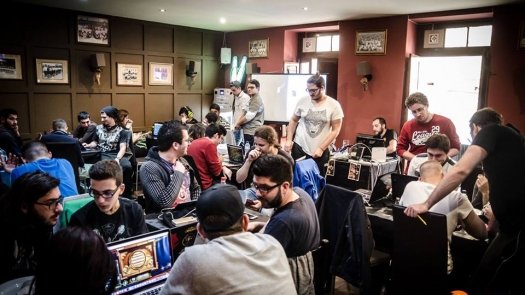
Quickfire is Malta’s premier esports league and event producer. They run tournaments for League of Legends, CS:GO, Dota 2, FIFA 18, Rocket League, and Hearthstone and have recently opened up a LAN center for local events and competitions, while looking to eventually create a full-fledged esports away team.
Simon Theuma, the founder and CEO of Quickfire took the time to answer some questions that Twin Galaxies had about the international esports scene and how they plan to make Malta an eventual competitive hub for Europe.
Twin Galaxies: Let’s start off by explaining who you are and what you do.
Simon Theuma: I'm CEO of an esports event company called Quickfire. We're based in Malta, and we have two main objectives. Number one is activating the community locally. In fact, we've just opened an esports center which basically amounts to a small LAN cafe of around twelve PCs and four PS4s. But, we intend to use it to hold tournaments locally as well as start teaching teams the “ins and outs”. So that would be stuff like better communication, teamwork, and also some business know-how, such as “how to speak to sponsors”, branding tips, and the like. Our "dream" would be to see a Maltese team competing at the top level, since there's talent, it's just not really nurtured. Same goes for our own bigger, more established sports (like soccer). So, it's not a problem endemic to esports. Objective number two is a bit bigger in scale. We want to turn Malta into a hub for esports, which means hosting pro-events here. We're working with national entities towards offering a favorable business climate for new esports startups and teams to set up shop here. We've got a very active gambling/betting community here, so we're finding ways to replicate that success in other areas too.

TG: Would you say the first real step to becoming a nation with esports be smaller events or would it be better to focus the effort on major pro events?
Simon: Twitch.tv kind of democratizes the process of hosting events. ESG Tour was a good example of that. Although gate money is lovely, it's not really provable at this stage. To answer your question directly, I think you need both. But, at this stage, I would be very skeptical of any local teams making it to a pro tournament. In fact, for us internally, it's like dealing with parallel streams (and projects).
TG: What would be the best way to attract foreign esports teams to join? Would there be a need for a domestic "league" that teams from other regions can join?
Simon: I think at this stage it's more viable as a business hub. We're actually in the process of setting up Malta's first esports leagues. So, even competition would be pretty weak, let alone the prizes that go into that. I’m obviously speaking in my own context which is Malta and its own situation.
TG: But, that makes sense as a single nation. Would it better, then, to focus on creating a Malta "team" and then going to the larger gaming hubs/leagues in EU or US?
Simon: As a single nation of our size, we're maybe 500k total population. So, pretty much, yes. Our endgame would be 'exports'. However, you can have a pro team that can compete anywhere abroad, but its commercial entity be based elsewhere.
TG: So, the plan is to make an awesome team and then send them to the big events elsewhere?
Simon: Yup! But, at the moment our role is more caretaker, rather than sending out a "Team Quickfire" to compete, though I wouldn't rule that out at some stage. But, we'd also like to do our own big events
TG: What about domestic options? Is this the kinda thing that can be utilized for Malta’s own tourism?
Simon: Yeah, for sure, but it's unproven. I don't know how many people would come over to watch esports. It could be 100 people or it could be 10k. I can't really know. Just do an event and see what happens, really.
TG: Aside from the LAN center and exports, is there anything additional of note to talk about with Quickfire?
Simon: Something I didn't mention is that we were acquired this year by, Eden Leisure Group, the largest entertainment group of companies in Malta, so Quickfire is essentially their "esports division". So, we got acquired back in May/ June since we had a particular vision that mixed local events with international ones that would have been impossible without resources of this scale. We met up and they were immediately interested in acquiring us rather than just working with us on a partnership basis.
What it going to take to make Malta big?
TG: Well, is there other esports companies or businesses that they had the option of acquiring? What made yours stand out?
Simon: There is another competitor locally, but I think it was our vision that made them listen and they took us on. We were previously working at another place, but they never really got the point and potential of esports. Since Eden was an entertainment company that markets heavily to teens, it is kind of a no-brainer.

TG: So, I’d love if you touch more on mixing local and international. You have the LAN center and you have the potential for export by making a Malta team. What's the real plan? How do you make this happen?
Simon: It takes a lot of time and patience, in the sense that we have to combat the local attitude of "I'm not good enough" and making people see esports as something worth pursuing.
TG: The talent pool in Malta must be there for it to work. What's the vetting process like?
Simon: There is no vetting process apart from tournament wins, but even that doesn't mean much locally. In fact, I tell our "winners" that local wins mean nothing. If you want to prove yourself go compete in ESL and then get back to me, because we get sponsorship requests all the time from teams. But, at the moment it's our policy to stay impartial and not directly support any teams. Luckily now, they are seeing that they need to step it up, and we're also offering our center up for such competition. For instance, we offer some LAN hours on the house to people if they come compete in bigger tournaments.
TG: Is the LAN center focused only on the sport professional side of things, or is it more of a "come relax and play a round here" most of the time?
Simon: We're starting from less than zero at the moment in terms of community. It's a bit of both right now. Our aim is to make it a home for all gamers. That means casual tournaments, fun stuff, and live esports. That's literally not done anywhere else in Malta at the moment. In fact, Quickfire as a concept started when we got too tired/old for classic LANs. We were like “OK, what's left? That's it?” So, initially, it was about the casual element, but a casual audience is harder to engage over time. You can't be all things to all people, so at the moment we're inclining more towards the competitive aspect.
TG: So, you set up events and tournaments. What would you say are some good tips for people that want to set up a tournament of their own anywhere in the world?
Simon: I’m still discovering them myself as I go along. I think it's less to do about the tournament and more to do about curating the community. You can make a tournament out of anything, like 1v1s, 2v2s. A tournament is just an excuse to get people together. I hosted my first esports event around 10 years ago, so, I do have a bit of experience under my belt. I hosted a 150 person LAN when i was 16, which for Malta is pretty big.
TG: What about some of the behind-the-scenes stuff, like referees, anti-cheating, etc.?
Simon: In local tournaments, it's not that big of an issue. I think it's more to do with positioning and branding your community to attract a certain type of audience in terms of the organising itself. Just use the many tools available. But, again, for amateur tournaments I wouldn't get too bogged down into the nitty-gritty of it.
TG: Speaking of, is there any particular tools to mention for those that are interested?
Simon: Tournament platforms, mostly, like battlefy, toornament, challonge, etc. But, you can now find ones that are dedicated to each game specifically. They would typically be PUG start-ups that you win money by playing on their platform and doing well. So, if you want to attract a specific audience it might make more sense to use that.
Events: Both Big and Small
TG: What kind of prizes do you tend to offer as a small-scale local event?
Simon: Depends on the event. For the big (by Maltese standards) LANs, between 150 - 200 people, it would actually be something along the lines of thousands of Euros. But, we're trying to scale that down a bit so that people focus more on the competitive aspect rather than how much money they can win. What's happened locally is that there are one of two incumbent winning teams. So, people who want to join your tournament just skip the 1st and 2nd prize and see what you're offering apart from that. Sometimes they just don’t compete at all because they know they can't win. So, in big-picture terms, there is such a thing as "too much prize money" unless the community can support it. I'm saying we don't have more than 8-12 active teams in any game at any point. After a big competition such as a LAN event, maybe a third to half of those available disband. You can understand why community development is vital at this point in time. We need to get more people into gaming, get them to compete, make sure they know what they need to do to improve, and finally give them the tools they need to go further, as well as the opportunities to grow once they get there.

TG: You mentioned earlier that you have 12 computers at the LAN center, but have had 150 to 200 people at an event. What do the brackets look like? Does this go across multiple days or are you able to accommodate in a single day event for those?
Simon: So, usually, LANs are “bring your own computer”. Our LANs typically last around four days, but the norm is three to four. Brackets vary depending on teams, but it would usually be groups, as well as single/double elimination. It's a marathon, but we have volunteers that help out. We want to do it twice a year. My favorite part of any LAN is “after hours” actually.
TG: What do the "after hours" entail?
Simon: We typically run tournament games from 8-11pm, because some people either need to go to work or whatnot. So, that lets us get a few good hours in. Then, it's just chilling out for the rest of it. We tend to have to work around people's schedules since not everyone can take leave. Say it's from Thursday to Sunday. So, it’d start Thursday evening and friday would ideally be a full day. In fact, there was a friend of mine who came to the LAN as a casual. After hours, I ended up next to him with my own PC, playing three or four hours of Heroes of the Storm each night during.
TG: Any fun stories from an event hosted?
Simon: Yea! We had our last LAN event at the Eden arena, a pretty big conference center. The nights were pretty rad, playing loud music and waking people up till like 5 or 6 AM. But, it was a cool chance for people who'd normally banter their ass off to get together and just chill out. At one point we ended up in a conga line while and an epic saxophone guy was playing music.
What's the end game?
TG: Do you see your "dream" goal as done by the gamers themselves or by non-players (like business folk) taking the reins?
Simon: I think there's space for both. The esports industry, in general, is not just about the players. There's a lot that needs to go in to support that ecosystem, such as creative talent and skills. We're also in the process of setting up student organisations locally to empower students to start getting into esports and considering it as a career. It's such a holistic approach that is needed that it gets dizzying at times. Like i said, we basically have to start from zero. Very soon, there's going to be a boom of demand for people who can edit video and know how to play League of Legends or Counter-Strike. For example, we're already experiencing it to a certain extent, but there are not enough people to fill those gaps, or maybe they have what's needed and haven't thought to put two-and-two together yet.
TG: From a number of people standpoint, would you say that teaming up with another country might help boost numbers, even if it’s not local?
Simon: It would, but you'd lose the effect of actually getting people to meet up. Doing it online is fine. But, through our center, we want to get people meeting up physically on a regular basis. It makes a ton of difference, especially for a community of our size.
TG: Physical interaction is definitely a key team-builder, but when you plan to take it internationally, would you allow for non-Malta residents to be a part of the community and team or would you try to keep it 100% Malta?
Simon: We intend to have the online portion open for all. But, obviously, there's a certain level of service that can only be delivered with a dedicated brick-and-mortar space. When we used to do live esports events, competing with other sports was difficult to find a schedule. So, on the one-off that there's an event that falls neatly in our timezone, and then hearing "Forget it, there's premier league on that night" is a downer. This is a thing of the past since we have our own space now.
TG: So, as a wrap up: Based on a smaller population like Malta, what advice would you have for smaller towns or populations internationally that want to create a gaming atmosphere? Any tips from someone that's experienced it, or things to avoid?
Simon: Try to use word of mouth as much as possible. For example, Facebook ads aren't so effective for us because Malta is literally to small to support audience insights. So, that means going door-to-door and speaking to people about your events, as well as getting them to tell their friends. Don't do things too frequently unless you're targeting a competitive audience. For this example, a casual offline event would happen once a month, but then have some port-of-call like a Facebook group to push for online things to keep the momentum going constantly. Working with already established groups also helps the community to grow. In Malta, we have local groups for individual games and, as Quickfire, we're on good terms with most (if not all) of the community admins. We make it a point to try and involve them as much as possible when it comes to hosting our events. I think an osmosis approach works well, focusing on getting most or all players from a small town together, then moving on to the next town, and so on. Try to snowball it from there. Having a consistent space, like our LAN center, to meet up also helps a lot, but that could be a municipal hall or even a friendly pub. Something that people would immediately say “OK, this is where gamers hang out or go to.” It doesn't have to be a LAN cafe or be equipped as such. Just get them together.
TG: Thank you so much! I appreciate your time and insight on Malta’s esports scene.
With insight from all sides of the world, Quickfire is quickly growing with events like the Nova Series and their own LAN center. Malta may not be the powerhouse in esports just yet, but it definitely has the heart and soul it takes to get there. For more interviews around the international esports industry, check out our chat with Norweigian Gigacon founder Renato Mahmutagic.