How Faithful Is Pokemon Lets Go Pikachu & Eevee To The Series?
By Jesse Collins ·
Alright, genwunners: An old Pokemon fan explains the importance of Pokemon Let's Go Pikachu & Eevee for newcomers, how this is a love letter to the series as a whole, and why the old guard should give it a fair shot.
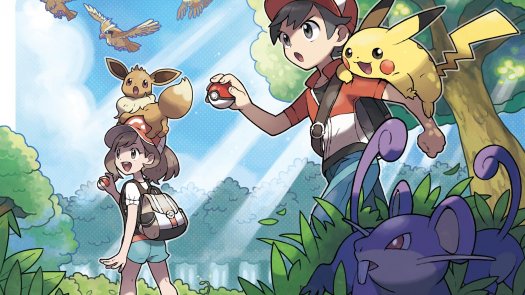
The upcoming Nintendo Switch releases of Pokemon Let’s Go Pikachu & Eevee have a lot of players wondering what to expect from the games. Are they “core” Pokemon games? Why do the mechanics look so familiar? I’ve been an avid Pokemon fan for twenty years and I’m going to break down the major key-points to help both newcomers and old fans alike understand what the game is meant to be, how you can maximize playtime when it launches in November, why several features feel familiar, and how to enjoy it with others.
Let’s start with the fact that this set is a Pokemon Yellow (Special Pikachu Edition) remake. The story takes place in Kanto, which is the region from the original first three games: Pokemon Red, Blue, and Yellow. Instead of starting with the usual Bulbasaur, Charmander, or Squirtle, players choose between Pikachu and Eevee, which were the starters between the player and rival in Yellow. Instead of focusing on those original players, however, the player characters (both boy and girl) and the rival are new characters set in a new story that relives the classic as an alternate take of sorts.
For old school fans, think of it as “this is what happened in an alternate universe” (since they exist in Pokemon) as opposed to the original timeline. In fact, think of this entire game as a massive love letter to the complete history of Pokemon, similar to how Pokemon Sun and Moon appeared to directly call out Red and Blue’s Kanto on a constant basis, before they go back to the usual core games in 2019. Yes, I know this new one is set in Kanto, but it’s so much more than that.
Gone are the days of the grind. Wild Pokemon roam visibly.
Random encounters have been a staple of Pokemon since the beginning, but not any longer. While we don’t know what the announced 2019 core games bring to the table, but Pokemon Let’s Go takes a very Pokemon-Go-esque route with catching Pokemon. While out in the wild, players are able to see what looms in the tall grass for once, similar to looking at the map on Pokemon Go.

Since there’s only 151 Pokemon in the game (plus one unannounced), giving players the ability to be picky and choosy makes more sense to help them really “catch ‘em all” in this game. This is even more apparent in the fact that wild Pokemon are not battled to be caught. This is where the Pokemon Go inspiration takes over and is exactly like the mobile game. Berries can be thrown and balls are used to catch.
Why is this important? Since players don’t battle wild Pokemon in this game in lieu of throwing berries and Pokeballs, there’s no need for the classic randomization and grind. If you see a Pokemon you want, run to it and try to catch it. As satisfying as it felt to finally find a Pikachu in Viridian Forest in Red back in the day, it was definitely frustrating. Because, c’mon. I know you chose Charmander and Misty’s gym isn’t THAT far and you needed something to take her on with since you decided to take the cool-but-useless-for-the-first-three-gyms fire lizard over the plant frog that actually was helpful for the first two gyms but was decidedly less "cool-looking".

Now, outside of the obvious Pokemon Go links, this has some prior inspiration from the Safari Zone of Red, Blue, and Yellow, as well. Within those games, the section in Fuschia City known as the Safari Zone allowed players to have a time-limit (set amount of steps) and had to use a special Safari Ball within the reserve, only throwing rocks or balls and never battling. Berries are a little less violent, so the change makes sense. But, Safari Zone doesn’t exist in the Let’s Go games due to the addition of the GO Park, which we’ll talk about in a little bit.
Since the beginning, version exclusives have existed.
As with every dual set of Pokemon games that’s come out in the past, there’s a difference between the two. The obvious first difference is the players’ starter pokemon in Pikachu & Eevee, respectively. This also will affect the Partner Power (which we’ll get to later) because the starter is different.
Version exclusives always happen as well, but they’re slightly different than the previous games, still being inspired by Red and Blue. The original games had eleven exclusives on each side, from which this new set only has seven. This means to “catch ‘em all”, players need a friend with the opposite title (or Pokemon Go), but this is nothing new to the series.
Players that get Let’s Go Pikachu will have the possibility of getting Sandshrew, Sandslash, Oddish, Gloom, Vileplume, Growlithe, and Arcanine. Let’s Go Eevee players have access to Vulpix, Ninetails, Meowth, Persian, Bellsprout, Weepinbell, and Victreebel.
In addition, certain Kanto region Pokemon have what’s known as “Alola Forms”, which are alternate options from the Alolan region in Pokemon Sun and Moon. As they’re part of the original 151 and all available in Pokemon Go, this is the only way to obtain them within Let’s Go. There’s 18 total, including Rattata, Raticate, Vulpix, Ninetails, Sandshrew, Sandslash, Grimer, Muk, Meowth, Persian, Diglett, Dugtrio, Geodude, Graveler, Golem, Exeggutor, Marowak, and Raichu.
The New Safari Zone: Pokemon GO Park
So, in the old games, we had the Safari Zone, which had exclusive Pokemon only found there. For this remake, Let’s Go will have a replacement in the form of the Pokemon GO Park.
GO Park is the base way of obtaining Pokemon from your Pokemon Go mobile games, but there’s limitations and special procedures. In fact, the GO Park is a direct reference to the Pal Park from Pokemon HeartGold and SoulSilver (which in turn was a returning feature from the fourth generation games: Pokemon Diamond, Pearl, and Platinum). This is the park that used to be the Safari Zone that allowed players to transfer Pokemon from prior games. Pokemon transferred into the game would be found in the tall grass and wait to be found to be caught by the player using special “Park Balls” (similar to the ones that the Safari Zone used). No battle was necessary and the Pal Park was just there was a conduit for players to receive their older Pokemon as a “mini-game” of sorts.

For Pokemon Let’s Go, they utilize the same catching features that the rest of Let’s Go employs, but it’s just a heightened version of the original Pal Park options anyway. All in all, throwing berries to the Pokemon affects them the exact same way as Pokemon Go, then players throw the Pokeball. While viewing the Park itself, the Pokemon get transferred from Pokemon Go and they wander around this confined area, waiting to be caught by the player. Pokemon with a higher Combat Power (CP) from Go will be higher levels and slightly harder to catch in the GO Park.
It’s simple, but keeps to the older style of Pal Park. On the upside for old-school Pokemon fans, atleast you don’t have to find the Warden’s teeth anymore by going here.
Co-op play is a defining and welcomed addition to the series.
There’s multiple parts to teaming up with friends in Pokemon Let’s Go: Battles, trades, Mystery Gifts, and co-op adventuring.
The first three are mainstays of Pokemon. Battling your friends and rivals is essential to the Pokemon experience. Trading is as well, especially with multiple versions with exclusive Pokemon. A gifting feature that acts exactly like the older Mystery Gift function has been shown as well, allowing players to “send a gift” to their friends. It’s unclear at time of writing if the gifts are known or to be a “mystery”, but it resembles the classic games and the gifting function of Pokemon Go, which is randomized items when opened.
The real coup de grace for multiplayer is in the ability to jump into a friend’s game on the fly. Can’t beat a particular trainer or Gym Leader? Have a friend jump in and take on the single opponent as a double-battle on your end. Yeah, I said “Gym Leader”, which means this game is all about the adventure as opposed to making things ridiculously difficult. The helpful player partner can roam the terrain with you and even bring out a partner Pokemon alongside yours.
Special Techniques and Partner Moves are a cool way to keep your starter usable.
Pokemon Yellow was notable for the Pikachu being the starter, having a distaste for being inside its Pokeball, and following behind the main character trainer at all times. This carried over to HeartGold and SoulSilver to allow whichever Pokemon was in the first slot follow behind the trainer. Well, the games allow that again, except it scales the Pokemon to the proper size as they travel behind you.
Pokemon Let’s Go Pikachu and Eevee offer different movement animations for each Partner Pokemon, but all 151 can follow behind at the least. Some, however, get the ability to be ridden. Pokemon like Tauros and Onix seem to increase movement speed slightly, while Lapras can be ridden on water, similar to Sun and Moon’s Ride Pager.
Whichever starter you get, Eevee or Pikachu, rides on the trainer during any travel too, since this is meant to mimic Yellow as well. But, they can learn Special Techniques which act the same way as HMs (Hidden Machines) do in older games. Since Sun and Moon did offer that Ride Pager, the need for HM management is gone. These Special Techniques allow for cutting trees (like CUT), floating off with some balloons (like FLY), and jumping on a surfboard (like, well, SURF). STRENGTH and FLASH have not been shown. While STRENGTH is likely to come back in some way, FLASH probably won’t be necessary this time around.
In Yellow, players could just deposit Pikachu in a box if they were a monster, and never look at it again, while the Let’s Go series makes the starter remain on the team, only offering five of the usual six slots available for others. Also, like Yellow, Pikachu and Eevee can’t evolve. Stop complaining, they’re actually useful. Not only do they learn the Special Techniques for out-of-battle needs, Partner Moves are available. These moves are special moves and can only be used at certain times, essentially acting like a Z-move from Sun and Moon.
Pikachu has been shown using a water-based Splishy Splash attack, a direct callout to Pokemon Yellow’s Surfing Pikachu (which has been referenced in multiple games since, even as recently as Pokemon Ultra Sun and Ultra Moon with an obtainable Pikachu with Surf technique). Pikachu also knows a special move called Pika Papow, a Normal-type move that increases in damage the higher the friendship level.
Eevee, on the other hand, is known as being a cute little Normal-type critter with a lot of potential, but no real use unless evolved. The Normal-type move Veevee Volley acts identical to Pika Papow. In reference to Eevee’s Kanto evolutions, it has three additional potential moves, Buzzy Buzz, Bouncy Bubble, and Sizzly Slide.
Serebii Video: A small video from Pokémon, Let's Go, Eevee! featuring Eevee while using Sea Skim from the Project Eevee account https://t.co/gDbXkHSvkT pic.twitter.com/IxqPXVwuJ5
— Serebii.net (@SerebiiNet) September 11, 2018
Interesting additional note to go with the similarities to Yellow, HeartGold, and SoulSilver is the Pokeball Plus accessory that is being sold at the same time that Let's Go comes out. So, back during Pokemon Yellow, a Pokemon Pikachu device was sold as a pedometer that could give the player additional items and acted similar to a Tamagotchi, but with rewards in the form of "Watts". During the next era, the Pokemon Pikachu 2 GS came out during the Pokemon Gold and Silver era that worked similarly, without the need to take care of Pikachu. But, this wasn't the last time, nor the more important connection.
The successor to the Pokemon Pikachu devices came in the form of the Pokewalker device that came in the package of Pokemon HeartGold and SoulSilver. The pedometer is still in tact and the ability to earn "Watts" is just the same, except the ability to transfer a Pokemon onto the accessory to give them experience by walking. Anyone that has played Pokemon Go knows this is identical to the "Buddy Pokemon" system. But, the Pokeball Plus does exactly this as well, allowing a Pokemon to be transferred from Let's Go into the device to roam around. In fact, it comes with a Mew in every Pokeball Plus, out of the package, for free. In addition, it works as a Joy-Con controller to play the game and attach to Pokemon Go to find Pokemon while dangling on your wrist while you're out, similar to the Pokemon Plus wristbands for the mobile game. The connections to the past are strong with this game.
The question you’re asking: Is Pokemon Let’s Go Pikachu and Eevee for me?
Alright, genwunner, are you done complaining about these games? No? Cool. Now, sit down and listen. The original games were known for their difficulty (which is both good and bad). That’s where I started, myself, in 1998. Replaying them years later on the Nintendo 3DS Virtual Console, I personally noted that they were frustratingly hard at times between the classic grind, box management, backpack management, and the need for HMs to be required and remain forever more on the Pokemon of choice. This isn’t even talking the fact that nostalgia may be taking over on your part, rose-tinted glasses and all.

Did all of that affect how much I enjoyed playing them again? Of course not. The games aged very well for what they were, but things that were added in Generation 2 and later have become real mainstays to the franchise. The games are all about being enjoyable for any audience, both young and old. If you want to be frustrated, Gen 1 and 2 are both available on the 3DS Virtual Console. But, this game is intent on being as approachable as Pokemon Go is.
Pokemon is about the challenge, sure, but it’s also about allowing the new generations to jump right in without the need to read a strategy guide. Sun and Moon really offered the handholding early in the games, for instance. But, by endgame, difficulty was amped up dramatically, such as the path to the Battle Tree which ended with a very difficult battle with Red or Blue (the characters) unless you had bulked up some and knew it was coming. Parts like Team Rainbow Rocket are meant to give a real challenge in Ultra Sun and Ultra Moon. So, even the easy games have hard parts.
Are you worried it's not faithful to the series? Well, the Mega Evolutions of Pokemon X and Y make a return, too. In addition, the grooming and petting option called Pokemon-Amie returns, albeit not necessarily with the same name. This game takes the best parts of each game and crashes them together as an ultimate compilation of what makes this franchise so great. As of right now, the only thing missing is the Gen 3 Hidden Bases and we have a complete set. Yea, Kanto Pokemon are the only ones available right now, but with a simple update or DLC pack, suddenly we could have the Johto region and 251 Pokemon to work with, and so on. This game may have more cards up its sleeve than it lets on.
Serebii Note: The Pokémon GO Global Challenges have begun in the Americas. Details @ https://t.co/NWlAdnmI2o pic.twitter.com/jhMjgD3RKc
— Serebii.net (@SerebiiNet) September 1, 2018
Maybe we'll see events like Pokemon Go's Community Days and raids (Like Moltres Day recently), the monthly Legendary via codes, special Pokemon through "research" (like Celebi has in Pokemon Go), or even something new and unique. Players are encouraged to get up off the couch, for sure. This is a series that evolves as much as the creatures in it and it's really all about coming together with other people, which was the reasoning for version exclusives in the first place.
I hope I’ve shown the stubborn a clearer path of why these games have the potential to be great. With Pokemon Go being such a huge success in the past two years, older players have to realize that a lot of the people coming into the franchise never played the core games. This will give them a nice transition going into future titles. It’s taking layers of the past seven generations and stacking them all onto a massive sandwich that plays with the heartstrings of longtime fans and invites newcomers to enjoy the series we love too. Don't let Pokemon live and die by the old ways. Embrace the new fans and treat them as if they've been here for 20 years with us.