The New Rock N' Roll: Video Games And Violent Behavior
By Jesse Collins ·
If you want to know the truth, we're still wondering why this topic is being brought up again. Violent games and behavior have been studied, then studied some more, for years. Then, someone brings it up again and the process repeats. What happened now?
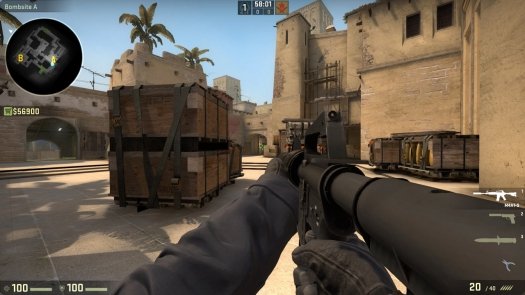
Every few years, tension surfaces from some traumatic event and the same argument bubbles up yet again. If you’re reading this at the Twin Galaxies website or follow video games at all, we’re sure you probably already know this one: “Violent behavior is caused by violent video games.”
So, let’s all say this together. Are you ready? Video games do not cause violent behavior. Video games are not “murder simulators”. Video games, like comic books, Dungeons and Dragons, and rock n’ roll music of yesteryear, are used as easy targets to place societal blame when the opportunity arises. Despite the ongoing blame, there have been countless studies to show over the years that, although there’s an increase in the in-the-moment aggression, there’s no direct link to violent behavior. Now, that we got that out of the way, let’s get into the nitty-gritty of this concept and why we’re still talking about it in this day and age.
On Valentine’s Day 2018, 17 people, including students and faculty, were killed by an automatic weapon at Marjory Stoneman Douglas High School in Parkland, FL. No, this article isn’t an argument for gun control. It’s an argument against what came next. Kentucky Governor Matt Bevin ( R ) steered the conversation to a tired and often-used scapegoat.
"There are video games that, yes, are listed for mature audiences,” Bevin claimed, during an interview on WHAS' Leland Conway show on Thursday morning. “But, kids play them and everybody knows it, and there's nothing to prevent the child from playing them. They celebrate the slaughtering of people. There are games that literally replicate and give people the ability to score points for doing the very same thing that these students are doing inside of schools, where you get extra points for finishing someone off who's lying there begging for their life."
This echoes very similar arguments that have come and passed over the years, such as those by the now disbarred ex-attorney Jack Thompson. "Murder simulators,” Thompson had famously claimed during his crusade, “are not constitutionally protected speech. They’re not even speech. They’re dangerous physical appliances that teach a kid how to kill efficiently and to love it."
Jack Thompson wasn’t the first to attack the game industry for violent games, but he was the loudest. From around 1997 until his disbarment in 2009, Thompson led the charge against violent game series like Counter-Strike, Grand Theft Auto, and Manhunt, all the while calling them “mental masturbation” and “murder simulators” on a regular basis. Since the disbarment, Thompson pops up now and again, but all in all, he had laid low for the past eight years.

Just prior to the February 14, 2018 school shooting, it was revealed that Jack Thompson had risen from the ashes to talk about the January 23 high school shooting in Marshall County, Kentucky. Having been in contact with the Marshall County Attorney and writing a letter to Governor Bevin may be what prompted Bevin’s focus on video games out of the blue. Since he was no longer allowed to be involved from a legal standpoint, Thompson had offered to help pro bono, and provide a “sworn statement” to detail when he was representing families in similar school shootings around the turn of the century until his “disbarment for life” by the Supreme Court.
Gov. Bevin continues Thompson’s sentiment, elaborating that the issue is a “cultural problem”, not guns being readily handy and accessible. “Why do we need a video game, for example, that encourages people to kill people?” Bevin continued. “Whether it’s lyrics, whether it’s TV shows, whether it’s movies, I’m asking the producers of these products, these video games and these movies, ask yourselves what redemptive value, other than shock value, other than the hope you’ll make a couple of bucks off it. At what price? At what price?”
A violent nut to not-so-violently crack
Kate Edwards is currently the Executive Director and Board Member at 501 (c) (3) non-profit Take This, which “seeks to inform our community about mental health issues, to provide education about mental disorders and mental illness prevention, and to reduce the stigma of mental illness” when it comes to video game players. Previously, She also was the Executive Director of the International Game Developers Association, which is a 501(c) (6) non-profit organization that helps independent game developers in numerous ways and conducts studies on and about the industry every year. We asked her point-blank if she thought there was any real base for the discussion.

“No,” Edwards began to explain, “I don't believe games cause violent behavior. Data shows that there is no correlation between the increase in video game playing and sales and an expected increase in violence (in fact it's the opposite). However, I do think there is the potential for ANY media type - games or otherwise - to evoke violent behavior from people who are predisposed to it for other reasons.”
The current Executive Director of the IGDA, Jen MacLean, spoke to us about this issue as well. “When anyone blames the tragic gun violence in the United States on video games,” she stated, “they ignore both facts and common sense. Billions of people around the world enjoy video games, but the United States is unique in the gun violence we suffer when compared to other countries with similar income and education levels. We need to stop scapegoating video games and start addressing the real problems contributing to the United States' gun violence epidemic.”
In June 2005, a University of Illinois researcher named Dmitri Williams published a paper on his findings. Prior to his study, most experiments focused on the short-term effects of violent games. The study, testing two groups of subjects, utilized the then-active game Asheron’s Call 2, a massively multiplayer online role playing game that levels up players and their attributes after killing monsters. Starting off with none of the subjects having never played an MMORPG before, one group was the control, while the other group played the game an average of two hours per day. The research paper explained, “The study tested for the effect of a particular kind of content that is substantially more violent than the average video game and should have more effect, given the highly repetitive nature of the violence.”
Williams and his team’s study found an interesting non-conclusion, as summarized by The Economist in 2005. “Game players,” The Economist wrote, “it turned out, were no more aggressive than the control group. Whether the participants had played games before, the number of hours spent gaming, and whether they liked violent movies or not, made no difference. The researchers noted, however, that more research is still needed to assess the impact of other genres, such as shoot-'em-ups or the urban violence of Grand Theft Auto. All games are different, and only when more detailed studies have been carried out will it be possible to generalise about the impact of gaming.”
After a controversial bill was passed in Florida on February 21, 2018, Rep. Kim Daniels (D-Jacksonville) stated that there’s “gun issues” that must be addressed, “but the real thing that needs to be addressed are issues of the heart.” She continued by mentioning video games as her example, claiming children are being trained to become virtual assassins. “Things might be getting so bad,” Daniels went on, “that people will come to realize problems are much larger than politics.”
In 2010, multiple studies indicated that violent video games can cause an increase in aggression while playing, but did not study anything in the long-term. In 2014, Pennsylvania started a fact-finding commission to look into a year-long mission on the harm that video games can have. Spoiler alert: They also found none. Over the years, multiple studies, experiments, and fact-finding missions have been drawn up, and each one has been knocked down.
Fast forward to January 2018, just a month prior to Governor Beven’s remarks, an experiment was conducted across 3,000 people. The core focus of the study was to see if opening up the idea of realistic concepts that games present “prime” the participants to translate into reality simply for those playing a realistic game. While the experiment only focused on adults this time around, Dr. David Zendle, the researcher conducting the study at the University of York’s Department of Computer Science, stated, “the findings suggest that there is no link between these kinds of realism in games and the kind of effects that video games are commonly thought to have on their players.”
While the experiment found no direct effects in the adults tested, Dr. Zendle stated, “we also only tested these theories on adults, so more work is needed to understand whether a different effect is evident in children players.”
While some focus on the aggression that video games may or may not enhance, others see it as a calming mechanism for most. “Video games are built as a form of entertainment,” Robert Workman, a staff writer at ComicBook.com told us. “If anything, they alleviate our stress by allowing us to live a virtual new life and do cool things. That said, the wrong sort of person could read them the wrong way, and as a result, adapt to a different kind of behavior. But that’s on the person - and the way they were brought up, not video games.”
Where are the parents and why are they letting this happen?
The question of if it’s on the child or the parent, or the classic “nature vs. nurture”, has been around for decades. In the case of violent games, that was the entire purpose of the Entertainment Software Rating Board (ESRB) to begin with. The ESRB was instituted to ease the concern between the original 1992 Mortal Kombat and has continued to scrutinize games for parents to understand in a simplistic rating structure.

The Entertainment Consumers Association (ECA) was founded in 2006 by industry veteran, Hal Halpin, as a way to help the consumers. As a 501 (c) (4) non-profit, they acted as lobbyists for the game industry and helped stave off the concern of whether violent games make violent people, as well as other points of interest. They promoted resources to help parents, like the ESRB, as well as many studies in its time.
In an interview with CBS News GameCore column in 2005, Halpin stated, “I believe that the retailers have made the prudent and necessary decisions, and parents must now take control of what their children read, watch, listen to, or play. As for adult gamers, games that have violence as an integral aspect to the story tend to appeal to their demographic and sell well because they're good games.”
He went on to mention the 1999 Columbine High School Massacre, perhaps one of the most infamous of all of the school shootings in history, which was done by two troubled students that also happened to play video games like the DOOM series. At the time Hal spoke, it was still fresh in everyone’s minds, but the thought can be considered even today. “Since Columbine,” he proceeded, “the media, politicians, special interest groups, lawyers, and scientists have been trying to determine what drove these two mentally disturbed individuals to commit such heinous acts. The focus has been on what they watched, played, listened to, read, and even how they dressed - rather than asking where their parents were.”
(Full Disclosure: Twin Galaxies Head of Editorial Jesse Collins wrote this article and was a Chapter President for the ECA from 2007 until 2013.)
During a meeting about school safety on February 22, 2017, US President Donald Trump discussed the intricacies of rating systems on a broader spectrum, mentioning video games (as well as movies) in his discussion. Although, there are already rating systems in place, like the video game industry’s ESRB, he spoke on the need for fracturing different ratings for different reasons, which has garnered criticism already.
At meeting on school safety, President Trump says violence in video games and movies is responsible for shaping young people’s thoughts: “We have to do something about maybe what they’re seeing” https://t.co/VfXvVkwQmq pic.twitter.com/vbt2t0dhtm
— CNN (@CNN) February 22, 2018
“We have to do something about maybe what they’re seeing and how they’re seeing it,” Trump began. “And, also, video games. I mean, more and more people say the level of violence on video games is really shaping young people’s thoughts. And then you go the further step and that’s the movies. You see these movies, they’re so violent and yet, a kid is able to see the movie if sex isn’t involved. But, killing is involved and maybe they have to put a rating system for that! And, you know, you get into a whole, very complicated, very big deal. But the fact is that you are having movies come out that are so violent, with the killing and everything else, that that’s another thing we’ll have to discuss. And a lot of people are saying that you have these movies, today, where you can go and have a child see the movie and yet it’s so violent and so disgusting, so we may have to talk.”
While many parents utilize the already-established ESRB on a regular basis, many don’t. Some parents know their children enough to see if they understand how reality works, while some parents don’t even look at the rating, even in situations where they should. In a study done by Hart Research Associates and the ESRB, findings showed that in 2017, 84% of parents are aware of the ESRB’s existence and what they do, yet only 71% of parents used the rating.
Ashlee Ortega, of Largo, FL, is a proud gamer mom with a nine-year-old son that plays games and has since he could hold a controller. When asked, she told Twin Galaxies, “As a parent, it's definitely hard to blanket a parenting approach to all of this. Some children are ‘softer’ than others, and some require a bit more guidance. My son is somewhere in between. We play games of 7 Days to Die and Resident Evil. But, then, at the same time he is so empathetic to others that he can't watch the news without getting sad and repeating the phrase ‘the world is so violent.’ There is a huge role played by the parents to teach the difference between that shown on TV or in games versus reality. I actually like my son playing games like Minecraft where he can be a total jerk and set fire to that town or kill his pet dog. But, he chooses not to because he'd feel bad. And if he does play the villain, he can see firsthand the consequences of his actions.”
Jason Fanelli, parent of a two-year-old future gamer and contributing writer for Twin Galaxies chimed in as well. “Studies abound that disprove any link whatsoever,” he said. “It’s just a convenient scapegoat. The blame could fall on the parents of the kids who: A.) don’t moderate what their kids are playing or for how long and B.) don’t even know what the kids are playing to begin with. In my opinion, if the parent/guardian of the child sets boundaries and rules, and makes sure to let the child know the difference between fantasy and reality, I’m confident a young video gamer will be a normal member of society when full grown.”
Is it time for a hard Reset on the violent video game question?
Rusel DeMaria, author of countless game industry books and strategy guides, has helped shape the way the game industry has been for over 30 years and is still active in the industry to this day. However, his 2007 book, Reset: Changing the Way We Look at Video Games, was a testament of research between multiple other books, court cases, and expert opinions of the modern question behind if there was a link between violent video games and violent behavior. While the book is currently eleven years old, the facts found can still be considered relevant to this day.

In his book, DeMaria cites a study done between 1960 and 1981 that was supposed to prove violence in television causes violent behavior. The study focused on 856 third graders in 1960 and proceeded to track them until they were thirty years old. Five years after the conclusion of the study, L. Rowell Huesmann, one of the primary researchers of the experiment, testified before the Senate Judiciary Committee, using a graph to show his findings and stated that there was a “strong relationship between early violence viewing and later adult criminality.”
Since then, this study is cited as a primary argument against video games. But, in 2002, thirty-three researchers across three continents filed a “friend-of-the-court” brief the United States Court of Appeals for the Eighth Circuit. The brief focused on the opposition of a decision to claim video games were not protected by the USA’s First Amendment.
“Citing numerous articles and studies,” DeMaria’s book, Reset, explained about the 2002 study, “the brief not only states that most studies failed to demonstrate a clear link between video game violence and violent behavior, but also that some studies were showing a positive release of emotion (catharsis) from such play.”
Where there’s smoke, is there always a fire?
This isn’t a question of morals or ethics. This isn’t a question of correlation vs. causation. This is a question about good parenting. Parents having been placing video games in front of their children for decades now as a sort-of digital babysitter. But, what games are they putting in front of their children? Is it the cartoony antics of the Super Mario franchise or the gritty, realistic warzone of Call of Duty? Are they utilizing the resources readily available to see if the game is right for their kids or just getting them the random game they asked for for their birthday?
Every so often, this debate comes back and then slowly dies, yet again. But, when will video games get past their their comic book-like “moment”, in which it never is brought up again? Will we have to wait sixty years or will this finally be put to rest? With toxic gamers and the ever-escalating issues of the world, that moment may not come just yet, but we can hope in the meantime.