Indiana Jones and the Last Crusade: 80s Anti-Piracy Nightmare
By NewsHound ·
ModernVintageGamer explores the 1989 Indiana Jones anti-piracy nightmare.
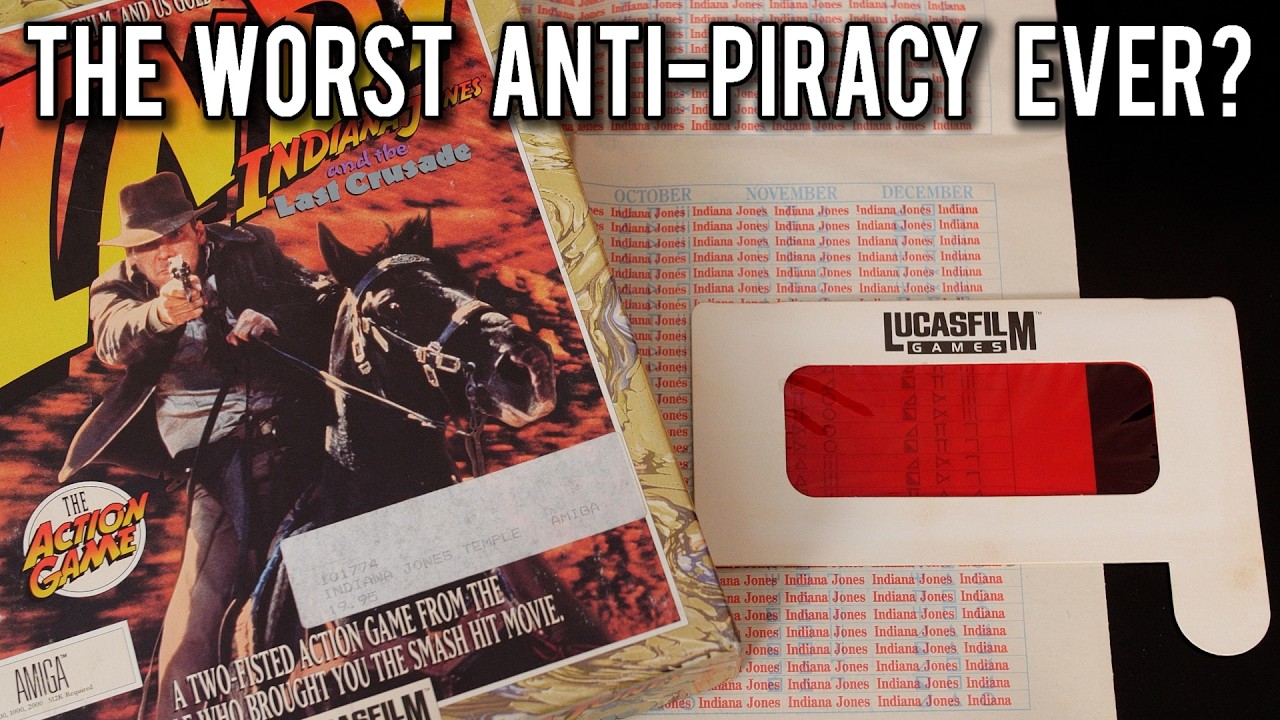
By the late 1980s, software piracy had severely impacted the Amiga platform, prompting many publishers to seek innovative anti-piracy solutions. The widespread copying threatened developers' revenue and forced a shift toward more complex protection schemes. This environment set the stage for experimental copy-protection methods in upcoming titles.
In 1989, Lucasfilm released Indiana Jones and the Last Crusade: The Action Game, employing a novel manual-based copy-protection approach. While the method differed from traditional schemes, it placed a burdensome requirement on players. Critics have labeled it one of the most frustrating early anti-piracy implementations.
It also highlighted the challenges faced by developers within the popular Indiana Jones franchise, which spanned films, games, and other media. ModernVintageGamer's analysis underscores how such measures shaped the legacy of early computer gaming.
Watch the video to see how the 1989 Indiana Jones game handled anti-piracy:
Comment highlights:
"It's like a secret treasure hunt, only here, the treasure is garbage. It's a bad sign when the DRM is more fun than the actual game itself." - @HisVirusness
"At least it doesn't installed a malware on your computer 😂" - @krcsirke
"I was in middle school around the mid 2000s and i remember they played the Don't copy that floppy video on all the classroom tvs lol We were like what?" - @SirTimmy7