Player beats Super Mario 64 in Under 2 Hours. . . Blindfolded
By Alex McCumbers ·
Super Mario 64 has made for a thriving speedrun community since the earliest days of its release. Even with all of that research and playtime, zserf does this while blindfolded.
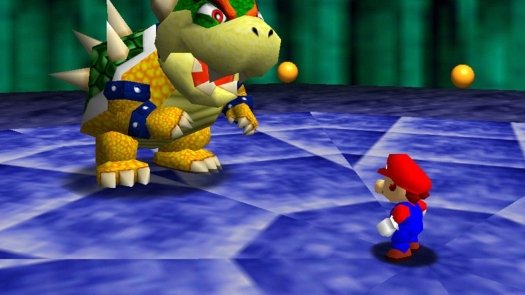
Super Mario 64 is a speedrun that has been impressive for the last 20 years, creating a spectacle in the earliest days of sharing speedruns. Even today, it remains one of the most active speedrun communities out there. So in a game that has a multitude of categories and tons of competition, how can players take that a step further? Blindfolds. We talked to zserf who recently made strides in his Super Mario 64 blindfolded speedrun.
Now, the thing with these sort of runs, is that there are not nearly as many other players doing it. There are only a handful of speedrunners playing games without the use of their eyes, but these runs remain as some of the most amazing examples of player skill and dedication. Note that most blindfolded runs are kept track of in their various communities. In this instance, zserf pointed to this spreadsheet which they’ve been using along with a bunch of other players doing similar feats with different games.
We asked zserf first how he even got into attempting this challenge, as well as his history with gaming.
“My family got an N64 for Christmas when I was young and our first two games were Mario Kart 64 and Super Mario 64. My family was always somewhat competitive when it came to games, so I got my start speedrunning because I was trying to beat my brothers' MK64 times.”
Sibling rivalry later led to wanting to compete against even more players. “As the youngest sibling,” explained zserf. “I ended up with the N64, but my interest in speedrunning was limited to MK64 because of their active community and the fact that it had a time trial mode. Like many people, I became more interested in speedrunning in general in the past few years with the rise of Games Done Quick events. I started doing 16 star runs of SM64 around this time.”
Games Done Quick has been inspiration to many runners with it’s wider appeal as it has opened up gamers to the speedrunning scene. For zserf, it was an AGDQ runner that turned him on to the idea of a blindfold run. “I became more aware of blindfolded runs as a possibility after Runnerguy2489's run at AGDQ 2015, but didn't initially pursue it. At some point in late 2016/early 2017 I had the first idea to try it with SM64. I practiced for a while and was able to beat the first level, but that's where I left it for several months.”
That initial attempt eventually lead to an obsession. “It wasn't until June 2017 that I had the idea that it might be possible to do the entire game. I pulled up a list of stars from the early stages and started ranking them by how plausible I thought they were. I had enough that I thought were possible that I decided to give it a try. Originally, I was just going through the levels to see if each one was possible.”
After all of that research, it was time to put the run together. “Once I had proven each level was possible, I wanted to record the route and make sure I hadn't forgotten some important detail. I used save states to play through the game, one section at a time. The day after I finished this, I was shocked to see Bubzia post his full game run on /r/speedrun. We started talking, I got put in contact with the rest of the blindfolded community and the rest is history.”

We then asked zserf to explain some of his thought process while performing the run. What sort of strategies are involved when vision is cut out entirely?
There are layers of strategies going on in the run, so much so that a mistake could throw the whole thing off. As zserf explained, “When something goes wrong while playing blindfolded, it can be near impossible to fix it. You usually don't know where you are or simply don't know how to get back to the correct path. This means that consistent strategies are essential for beating the game.”
“Consistent strategies have three different parts: positioning, movement and timing.”
“For consistent positioning, ledges, walls and corners are very important. When you run into a wall or hang off a ledge, you know that you are somewhere along a short line. Once that happens, you can move into a corner to determine your exact location.”
“Your options for consistent movement depend on whether spacing is important. If you're just running to a wall, then the exact distance you need to move isn't important. However, the angles are important, so the main techniques are to move the camera and to move the joystick in cardinal directions. If spacing is important then you want to use backflips or punches, as these always move you the same distance. Running isn't an option in these cases because your timing isn't precise enough to know when to stop.”

In a blindfolded speedrun, this one especially, timing is crucial to success and also want of the hardest things to master. “Consistent timing is the most difficult aspect of blindfolded running for me. I try to avoid strategies that involve timing as much as I can, but it isn't possible to eliminate it entirely. The worst example of this is that there is a jump between moving platforms at the end of the final level. How can you possibly time a jump to the fraction of a second when the platforms don't make sound and you can't see? You use the really loud thing that follows a pattern, the music!”
“There are other techniques, but it all comes down to being resourceful and finding ways to be consistent. In SM64, you can hear music, the camera, enemies, bubbles, timers, coins, 1-ups, Mario's movement and his interactions with walls, corners, ledges, slides and ceilings. The developers put a lot of effort into the sound, so there's a lot you can take in when you really listen.”
For further insight into the run, zserf joined up with Bubzia to commentate over the recording.
For those reading all of this and wondering to themselves what type of crazy is needed to attempt something of this magnitude, it seems like the overcoming of extreme difficulty is what drives a run like this. We asked zserf to explained his take on why players often adopt extreme challenges, even years after the game has been released.
“It seems like I am drawn to hobbies where a single mistake can bring everything down. In blindfolded games, a mistake gets you hopelessly lost. In chess, a careless move can undo hours of hard fought gains. In juggling and slacklining, imprecision literally sends things crashing to the ground.”
“I think the recent popularity of Getting Over It with Bennett Foddy proves that many people have this same desire to be challenged," zserf explained. He refers to a 2017 indie title in which players command a man wedged into a pot with a sledgehammer in hand. With 360 degree motion on the hammer, players must latch on to corners and surfaces to climb an increasingly difficult tower of odd objects. "[Foddy] characterizes it as ‘ambition's opposite. An obdurate mission to taste defeat’. It's not a desire to see if it can be done, because if you doubt that you can do it, you won't succeed. You have to be both arrogant enough to believe you can do it and passionate enough to have the drive to do it.”

Getting Over It is a game that speedrunners have gravitated towards Despite the design being purposefully rage-inducing, there’s an element of philosophy in that title that we’ve discussed once before.
“I think the reason people attempt these extreme challenges on decades old games is because these games encourage exploration and play. It's a game where it's fun just to run and jump around, wall kicking or diving. You start to wonder, can I get up the mountain with the koopa shell? Can I jump to the island from here? Do I ever need to open cannons? Can I beat the game without collecting coins? The more you explore, the more questions you ask and the more challenges you can set for yourself. It's really a testament to how well made these games are that people still enjoy exploring them and pushing the limits.”
A part of the gaming world that has always sparked a bit of controversy, even on the scoring side of Twin Galaxies, is emulation, fan games, and rom hacking. We asked zserf to weigh in on this, being that emulation is often used in speedrunners learning a game or creating something unique while using that original game as a base.
“This run wouldn't have been possible without emulation," zserf said in defense of emulation playthroughs. "Save states allow you to practice the same section over and over again, to figure out what works, what doesn't, and how exactly to do it. I've never really played fan games or rom hacks, but I think it's great that people are passionate enough to create them.”

Despite its age and shortfalls, Super Mario 64 continues to pull in players. Sure it’s a testament to the design of the game, but players like zserf is what can truly bring out something special. It’s not the game, it’s the player that drives these moments.
Want to read up on further gaming greatness? We cover some of the most amazing new gaming achievements on this side of the record books each week! Check out the speed-heavy section of record breakers we rounded up in our recent Scoreboard Spotlight!