Challenging The Problems Of Esports Presentation & Mainstream Translation
By Jason Fanelli ·
Esports is a booming business, but there's a hurdle in its path to household status that some folks might not even be considering: the presentation of esports sucks, and it's time for a change.
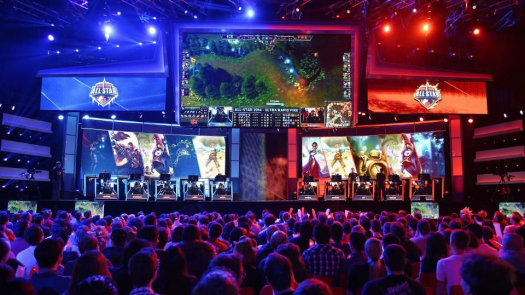
Hello esports and competitive gaming, nice to see you. You’ve grown so much since I first met you, and you’re growing more and more every day. I don’t know what you’re doing, training, saying your prayers, eating your vegetables, or what, but your growth and rise to prominence are equally awe-inspiring and not surprising. After all, video games are a great form of competition, so finding professionals to play in organized leagues shouldn’t be difficult.
However, there’s a major growing pain we need to talk about, an intervention if you will, if you are going to reach the same level as the core professional sports like football and baseball. Something that will take work and conscious effort to fix, but if the fix happens it will be the final hurdle between esports and immortality.
I’m talking of course about presentation, the things people see and hear whenever they tune into one of your competitions. This presentation sucks, to put it lightly, and it’s high time every competition in gaming reads the writing on the wall: fix this, or you’ll never break through the mainstream.
Before I get into what’s wrong with esports presentation, I want to make very clear that I do not blame the hosts or commentators themselves for these shortcomings. Esports commentators do tremendous work for their corresponding events calling the action as best they can. The problem lies in that every commentator seems to think that A) every detail must be reported at every moment and B) they have to talk as fast or as loud as possible in order to get it out. Neither of these things are true, and continuing to fall into these traps will only worsen the experience for the viewers.
Knowing It All Doesn’t Matter
First and foremost, commentators in most esports leagues speak about the action in laser-focused minute detail. This sounds logical, as the speakers are showing they know the intricacies of the matches they’re watching. However, too much technical jargon will fly over a casual viewer’s head, losing his or her interest in the process. In the League of Legends clip above, there are so many terms being thrown around willy nilly that I, admittedly someone who isn’t as familiar with LoL as I am with other games, have no clue how to decipher. This doesn’t do much to bring me in, and that’s an issue.
Some commentators (not in this clip, but elsewhere) employ the “shoutcasting” technique of screaming as loud as they can for an entire match. When I tune into a esports competition I want to feel like I’m watching sports, not standing in front of a drill sergeant barking orders. Now, I do not want to conflate shoutcasting with legitimate excitement from the commentators, because excited reactions to a big play are fine. I’m talking about the constant cacophony of shouts for every action on-screen. Matches need to be presented as if they’re talking (not screaming) to someone who’s never played video games before, much less know enough about them to compete. Shoutcasting isn’t as prevalent as it was, at least not in my experience, but it does persist.
Simplifyyyyyy, man!
The K.I.S.S. Method (Keep It Simple, Stupid) sounds like it should be the perfect solution, but then you run the risk of being too basic and sounding uninformed. The best fix, in my opinion, would be finding that balance of basic play-by-play with occasional commentary that digs deeper into the action. Oh, and profanity needs to be taken right out. Nothing makes a new viewer switch to something else - particularly in the case of a child watching with parents - like rampant F bombs and other uncouth language. There was a time when viewership was confined to an underground arena where no rules applied and no filters need be applied. In any esports arena hoping to gain further legitimacy today, that can't continue. A standard of civility has to be considered.
Take a look at football commentary: one person delivers the action as it happens, the other explains why a play did or didn’t work, and the game continues. Neither allow themselves to curse on air, no matter how exciting the action gets, and the information is brought to the viewer crisply and cleanly. Granted this won’t work exactly the same way in esports as it does in football, as esports doesn’t have nearly as much downtime as conventional sports, but that brings me to my next point…
No Time To Process
This is more specific to a particular sector of competitive gaming, but since Street Fighter V is shown on ESPN once a year it’s worth mentioning. There’s very little downtime between matches in some leagues, particularly in the fighting game community, leaving very little time to register what and why the previous match turned out how it did.
I keep thinking back to that highly touted first to 10 series between Dominique “SonicFox” McLean and Goichi "GO1" Kishida in Dragon Ball FighterZ from Final Round 2018. They played 14 separate matches in 62 minutes, about four and a half minutes per match, with very little time in between to absorb each of SonicFox’s and GO1’s wins. The first two matches in the set, for example, had only 18 seconds pass between them. Won't people who aren’t fighting game fans, say perhaps Dragon Ball Z fans who want to see the game and its best players, want to know why GO1 was so dominant or how SonicFox was able to take four games from him?
More Time Between Matches For Replay
I’m not saying every match should have a lengthy five minute bathroom break, but maybe expands that 18 seconds to a minute or even 45 second. This gives the players time to come down from the last match, this gives the commentators time to explain what went down, and this gives someone working a potential replay board to work something up and give the commentators something to break down, something to pull the viewer in and at the very least create the illusion of a learning experience.
I will say that the commentators in this particular video, Michael “IFC Yipes” Mendoza and Steve “Tasty_Steve” Scott do a very good job of breaking down the action as it happens, but as I said in my previous point the action is going so fast they don’t have time to truly explain the details that would translate the game to a casual viewer, they’re just spitting out terms and moves from memory with little context. I might know what a “meaty low” is, but a casual viewer unfamiliar with fighting games will not. A brief replay period between matches could fix that while also teaching the viewers at home the nuance of fighting games, and a knowledgeable fanbase is a good one.
Watching Esports Can Sometimes Be Disorienting
Part of what makes competitive gaming so enticing is how high-energy matches tend to be. The action of the Overwatch League and Call of Duty World League is fast and furious, sometimes going down to the last kill. However the speed of that action makes watching them painfully difficult for some folks, particularly for those with motion sickness. Take a look at the Overwatch League clip above: first-person view, 60 frames per second. To a gamer that’s ideal, to a non-gamer that’s akin to riding a roller coaster you didn't know you were about to go on.
The Viewer Cam
The solution here falls on the developer of the game to create a way for outside viewers to watch without just trailing a single player. We need to be able to see a skirmish from the outside, see everyone involved, and pick a point to focus on ourselves. The camera already pans out for certain character moves, so the precedent of a fixed view outside of the first-person view of a player is there. I imagine this is a tall order to ask of a dev, and I do now want to discount that fact, but something like this will go a long way in making Overwatch League even more popular than it already is.
So how do we fix this? There have been a few suggestions thrown around in recent times, one particularly interesting idea comparing esports to the Olympics from Susan Arendt writing for Polygon. I feel like she’s on the right track there, emphasizing how Olympic events only appear every four years, yet the Olympic viewer never feels like the action is going over his or her head. I propose something different, and I'm calling on the most popular genre in video games right now to do it. Battle Royale games have the potential to set a new standard for esports presentation, and here’s how I would do it: borrow from golf.
Golf, the slowest and most methodical sport out there, presents multiple players on many different sections of the course, but broadcasts seamlessly transition between two players and work their way through the top names on the course. Battle Royale games can do something similar: have a sort of dungeon master watching the entire map, picking and choosing potential skirmishes on the map and directing the camera to focus on those areas. People aren’t going to want to watch the one guy who dropped at Risky Reels in Fortnite, they want to see the eight players near the Dusty Depot crater beating the heck out of each other. Having a constant “eye in the sky” can do that.
Oh, and if you’re thinking to yourself “you just described something straight out of The Hunger Games, ya big dope,” well...that’s certainly apropos, isn’t it?
If you’re reading this as a commentator or league runner, please do not mistake this video for a takedown of esports in general, I rather enjoy watching competitive gaming of all kinds. However, I’ve been playing games since I was three years old, so I have a basic knowledge of gaming’s inner foibles. Esports leagues already has people like me tuning in. They've already got the price of admission from me and people like me. At this point, they should be trying to get the person who has never picked up a game before or only plays a friend’s console at his or her house. These adjustments will bring those people in, and the broadcast of the increasingly popular competitive gaming world will be better for it.