GTL: Industry Issues - Violent Video Game Taxes, Loot Boxes and Net Neutrality
By Twin Galaxies Editorial Staff ·
Recent tragedy and violent video games' role in it, microtransaction controversies and the repeal of Net Neutrality have the video game industry under scrutiny. What do these issues mean for the future of video games?
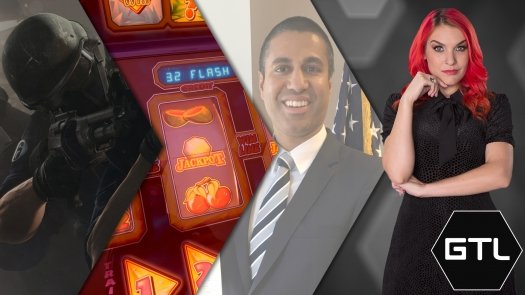
The video game world is currently facing issues that are having people question what the future may hold for the billion dollar industry. From blaming violent video games for recent tradegies, diving into the microtransaction controversy and how the repeal of net neutrality may affect the gaming industry, Mandi Roman discusses these issues on this episode of Game Talk Live. Guests include Kate Edwards of Take This Org, former public relations director and media commentator of the video game industry Marcus Beer and Co-Founder of IGN Entertainment Tal Blevins.
With the rise of online-only games and games being created as services, are we completely moving away from single purchase games? The panelists discuss how the likelyhood of microtransactions and DLC being removed from modern games is very low, as they are a great source of revenue. Game Talk Live discusses how publishers and developers need to be much more transparent in what the players can realistically expect from their purchases of loot boxes. Discussion also covers the ethical nature of loot boxes, more fair systems for the RNG based loot box system, and how the free to play model of game development has been encouraged because of microtransactions.
Also covered in this topic is the calssification of loot boxes as a form of gambling and the new ESRB labeling system for in-game purchases. Is the new ESRB labeling system too broad considering the different kinds of microtransactions there are?
“You cannot expect a consumer to be happy if they’re going to drop $50 or $100 on a #lootcrate and get a bunch of crap out of it. There has to be a certain sense of fairness in what you’re getting.” -@geogrify
— GameTalkLive (@GameTalkLive) March 2, 2018
Watch Live: https://t.co/P6c9mGiRoU#games #lootcrates #gamer pic.twitter.com/aKX3kSnQMd
The panel then turns its attention to issue of violent video games being once again blamed for acts of violence. Are violent video games being used as a scapegoat? Discussion covers how the majority of the players of these violent games do not commit extreme acts of violence, how politicians come back to blaming video games instead of the real issues causing these tradegies, and how there is no concrete data that proves a correlation between playing violent video games and committing acts of violence.
Panelists question why violent video games are still the subject of blame when clear examples, such as the Supreme Court ruling violent video games as a form of free speech and data that shows that violent crimes have gone down while sales of violent video games have risen, refute the notion of violent video games causing people to commit violence. The Panelists also give their thoughts on the proposed tax on violent video games and the reasoning behind it.
“Video games have been a scapegoat for the last 20 years… It always comes down to the politician blaming what’s popular right now over what’s putting money into their back pockets.” -@AnnoyedGamer, on blaming #videogames for #shootings
— GameTalkLive (@GameTalkLive) March 2, 2018
Watch Live: https://t.co/P6c9mGiRoU pic.twitter.com/gMb27YO5tx
Finally, Game Talk Live moves toward the subject of Net Neutrality and the overall affect its repeal may have on the gaming industry and the internet as a whole. Is the repeal of Net Neutrality as oppressive as it sounds? Will public outcry prevent major internet service providers from taking advantage of the repeal in a negative manner, when it comes to the public and how they utitlize the web?
The show has wrapped for today, but you can ctach it in its entirety in the video above. Be sure to check out the previous episode of Game Talk Live where panelists discuss the politics of EVO 2018 and the bar for entry to fighting competition.